
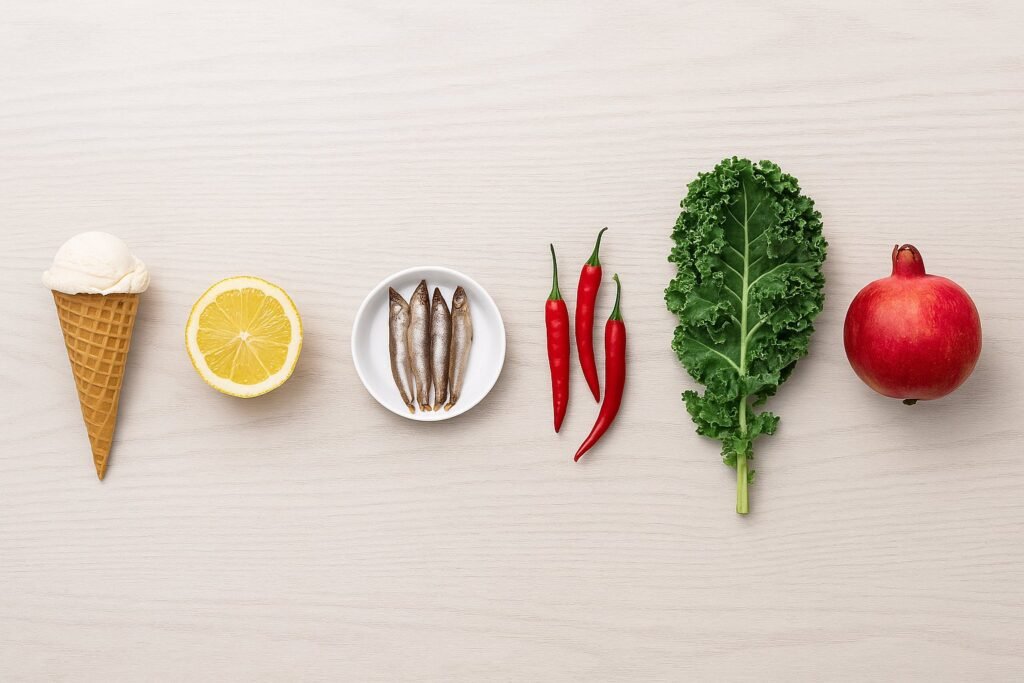
Ayurveda Taste
Healing with Taste:
How the 6 Tastes of Ayurveda Restore Health Balance
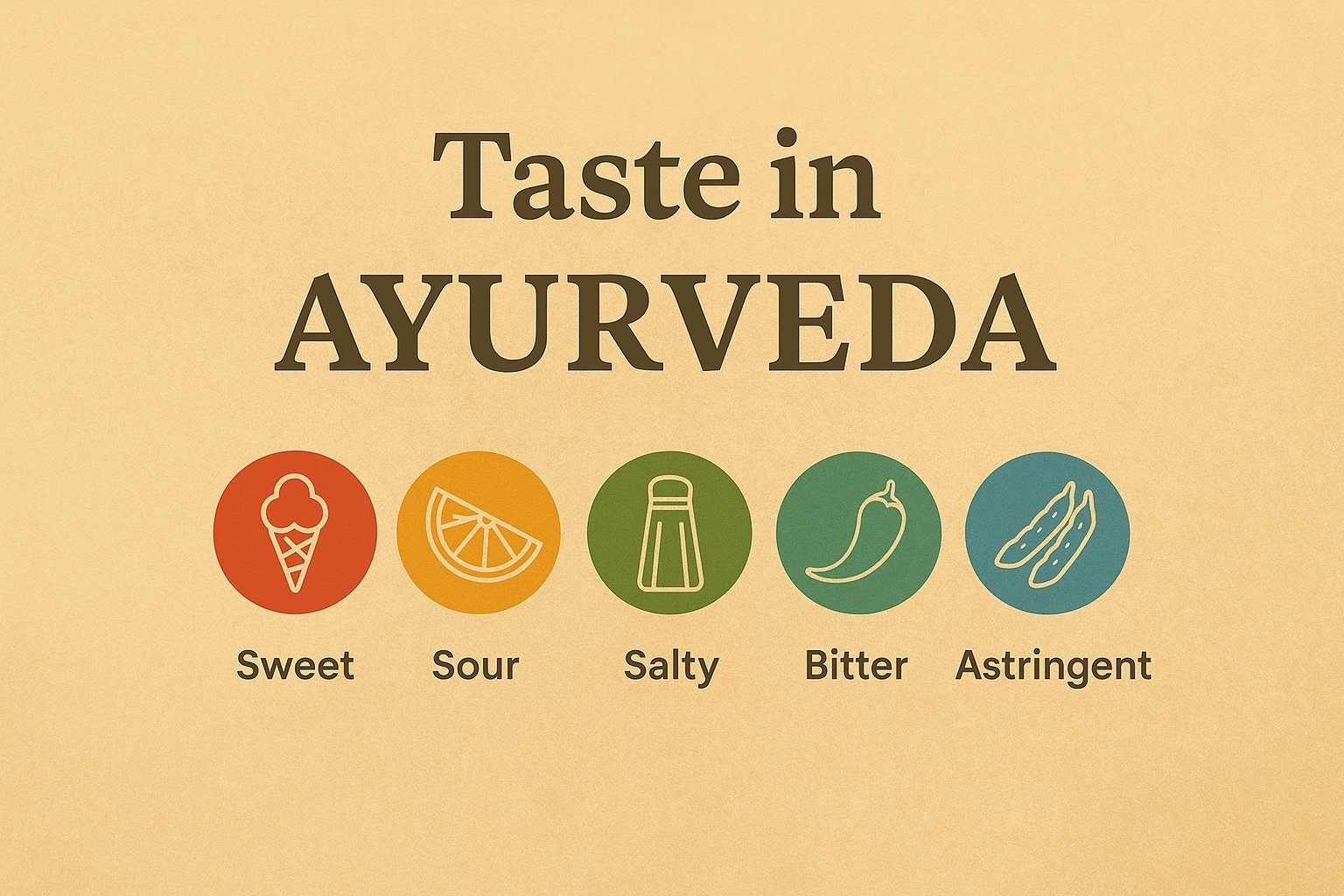
In Ayurveda, food is not just nourishment—it’s medicine. What you eat affects not only your physical health but also your mental clarity, emotions, and energy levels. One of Ayurveda’s most powerful tools for healing and restoring balance is the concept of Rasa, or Ayurveda taste. There are six tastes in Ayurveda: sweet, sour, salty, bitter, pungent, and astringent. Each taste has a distinct effect on the body and mind and plays a vital role in balancing the three doshas: Vata, Pitta, and Kapha.
Ayurveda taste is a key step in choosing the right foods to balance your unique constitution and correct imbalances that lead to disease.
By taste alone, one can understand which dosha will be pacified or aggravated.
1. Sweet (Madhura)
Qualities: Heavy, cooling, moistening
Balances: Vata and Pitta
Aggravates: Kapha
The sweet ayurveda taste is grounding and nourishing. It builds tissue, supports immunity, and promotes satisfaction and strength. Foods with sweet taste include grains (like rice and wheat), dairy, sweet fruits, and natural sweeteners like honey (in small amounts).
When used appropriately, sweet taste can calm the nervous system and promote contentment. But in excess, it can lead to lethargy, weight gain, and mucus buildup—typical signs of a Kapha imbalance.
2. Sour (Amla)
Qualities: Heating, oily, light
Balances: Vata
Aggravates: Pitta and Kapha
Sour ayurveda taste stimulates digestion, awakens the senses, and increases salivation. It includes citrus fruits, vinegar, yogurt, fermented foods, and pickles. It can be helpful in small amounts for people with poor appetite or sluggish digestion, especially those with Vata imbalances.
However, excess sour taste can provoke Pitta, causing heartburn, acidity, and irritation, and it can also worsen Kapha with its heavy and moistening qualities.
3. Salty (Lavana)
Qualities: Heating, heavy, moistening
Balances: Vata
Aggravates: Pitta and Kapha
Salt enhances flavor, retains water in the body, and promotes digestion and absorption. Natural sources include sea salt, rock salt, and salted foods like seaweed or brined vegetables.
Used moderately, salty ayurveda taste helps ground Vata and supports fluid balance. But in excess, it can increase blood pressure, lead to water retention, and intensify Pitta’s heat and Kapha’s heaviness.

Well done is better than well said.Taste is the doorway through which food enters not only our body, but our consciousness.
- Dr. Vasant Lad
4. Pungent (Katu)
Qualities: Hot, dry, light
Balances: Kapha
Aggravates: Vata and Pitta
Pungent ayurveda taste is the spiciest of all—found in chili, garlic, onion, ginger, mustard, and black pepper. It stimulates digestion, clears sinuses, and breaks up mucus and stagnation.
Pungent foods are great for reducing Kapha, especially in cases of congestion or sluggish metabolism. But too much can cause Pitta irritation (like inflammation or ulcers) and aggravate Vata by drying and heating the system.
5. Bitter (Tikta)
Qualities: Cooling, light, dry
Balances: Pitta and Kapha
Aggravates: Vata
Bitter ayurveda taste is detoxifying, cleansing, and purifying. It includes foods like leafy greens (spinach, kale, dandelion), bitter gourd, turmeric, and coffee.
It cools the body, reduces inflammation, and clears toxins (Ama), making it ideal for Pitta and Kapha imbalances. But in excess, it can weaken digestion, dry the tissues, and unground Vata types.
6. Astringent (Kashaya)
Qualities: Cooling, dry, heavy
Balances: Pitta and Kapha
Aggravates: Vata
Astringent ayurveda taste causes a dry, puckering feeling in the mouth. Foods like legumes, green apples, cranberries, pomegranates, and raw vegetables have astringent properties.
This taste is useful for toning tissues, stopping diarrhea, and controlling bleeding. It pacifies Pitta and Kapha, but because it’s so drying, it can increase Vata, leading to constipation or dryness in the skin and joints.
What tastes good is not always what heals you. Ayurveda teaches us to distinguish craving from cure.
- Dr. Claudia Welch
Using Taste as Medicine
In Ayurveda, the guiding principle is: “Like increases like, and opposites balance.” If your constitution or current imbalance has too much of a particular quality (hot, cold, dry, oily), you balance it by introducing the opposite through food, herbs, and lifestyle.
By understanding the six tastes and how they affect the doshas, you can consciously select meals that restore harmony in your body. For example:
If you’re experiencing dryness, gas, or anxiety (Vata), focus on sweet, sour, and salty tastes.
If you feel hot, irritable, or inflamed (Pitta), increase sweet, bitter, and astringent foods.
If you’re sluggish, congested, or gaining weight (Kapha), emphasize pungent, bitter, and astringent tastes
Final Thoughts
Ayurveda teaches that food is not a one-size-fits-all prescription. What’s beneficial for one person may aggravate another. By becoming aware of your constitution and current imbalances, and learning how the six tastes influence the body, you can use food as a powerful and personalized tool for healing.
Next time you sit down to eat, ask yourself—not just what you’re eating—but how it tastes, and how it’s helping you balance your doshas. Healing might just be on your plate.