

Dhinacharya
The Ayurvedic Daily Routine for Vitality, Balance, and Longevity
In the modern world of alarms, deadlines, and digital distractions, many of us have lost connection to the natural rhythms that govern our bodies and minds. Ayurveda, the ancient system of holistic medicine from India, offers a remedy through Dhinacharya—a daily routine designed to align you with nature’s cycles and foster health, clarity, and emotional stability.
What is Dhinacharya?
Dhinacharya (Sanskrit: “Dina” = day, “Acharya” = behavior or practice) is the Ayurvedic blueprint for living in harmony with the daily cycles of the sun, moon, and natural elements. It is a powerful preventive practice that strengthens digestion, stabilizes energy, purifies the body, and calms the mind.
Rather than reacting to life, Dhinacharya helps you respond from a place of rhythm and centeredness.
Why Is Dhinacharya Important?
According to Ayurveda, the body’s doshas (Vata, Pitta, and Kapha) rise and fall in cycles throughout the day. By syncing your actions with these cycles, you:
Optimize energy and digestion
Reduce disease risk
Improve sleep and mood
Support mental clarity and emotional stability
Preserve ojas (vital energy and immunity)
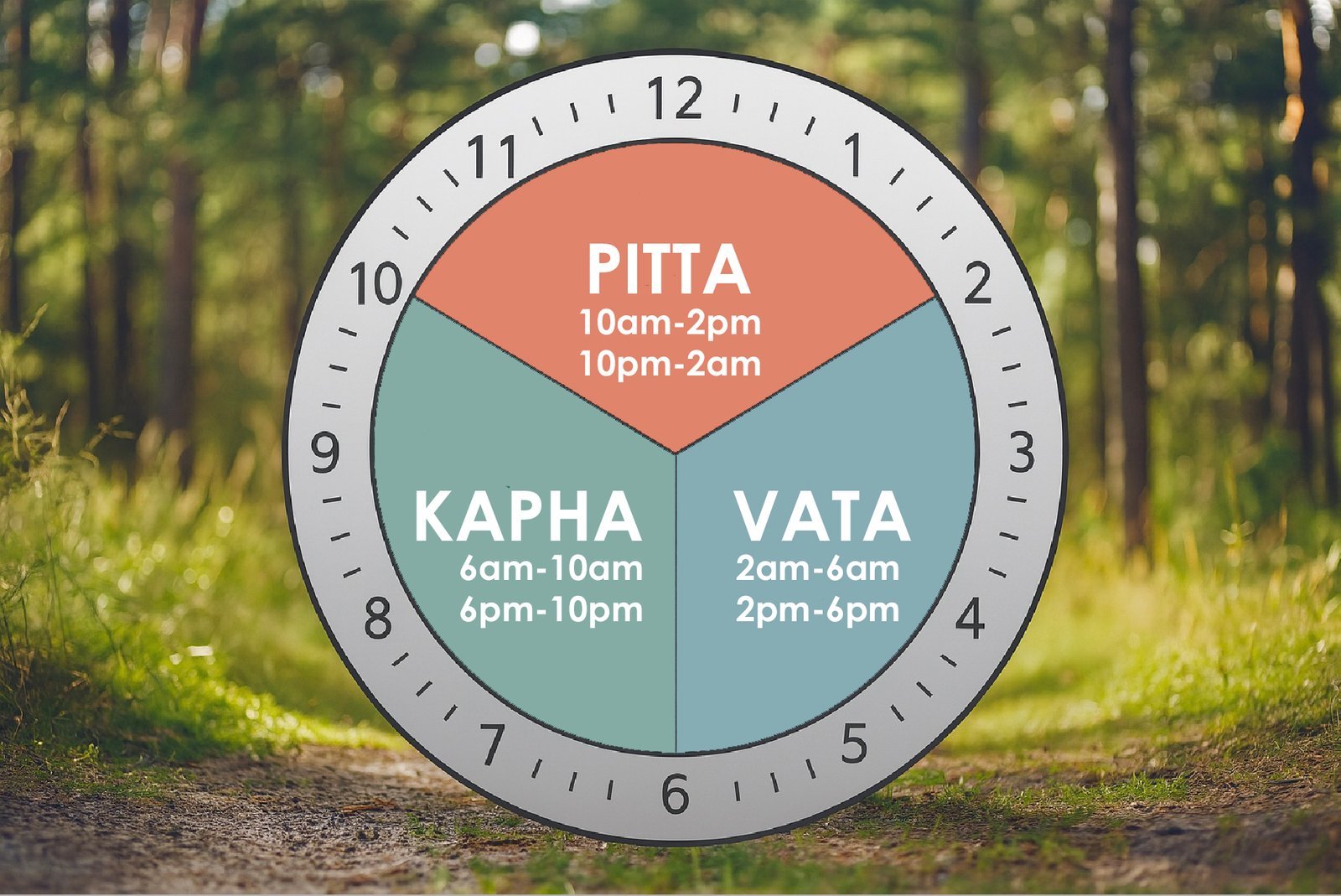

A balanced day begins with balanced intention. Dhinacharya brings rhythm to the body and calm to the mind.
The Ideal Ayurvedic Daily Routine
🌅 Early Morning (~4:30am to 6:00am)
Wake before sunrise to absorb the calm, subtle energy of Vata time.
Express gratitude for waking and reflect on your intention for the day.
Eliminate waste (urination and bowel movements) to detoxify and clear the system.
Cleanse the senses:
Tongue scraping (removes toxins and enhances taste)
Oil pulling (clears the mouth, strengthens gums)
Nasya (nose oiling to balance prana and improve breathing)
Eye washing or rosewater application
🚿 Morning Cleansing and Movement (~6:00am–10:00am)
Kapha is dominant during this time, bringing heaviness and sluggishness—perfect for physical movement to counterbalance.
Abhyanga (self-oil massage) with warm sesame or coconut oil nourishes skin, calms nerves, and improves circulation.
Warm bath or shower to cleanse and refresh.
Exercise: Yoga, walking, or any movement that builds lightness and warmth.
Pranayama (breathing exercises) to awaken energy and steady the mind.
Meditation for mental clarity and emotional resilience.
🥣 Mid-Morning to Midday (~10:00am–2:00pm)
This is Pitta time, when digestive fire (Agni) is strongest.
Main meal should be taken at noon, when the sun (outer fire) supports your inner fire.
Choose warm, fresh, and balanced foods based on your constitution and season.
Avoid cold, processed, or leftover foods which dull the Agni.
🧘♂️ Afternoon (~2:00pm–6:00pm)
Vata rises again—creative energy surges, but so can restlessness and fatigue.
Ideal time for focused mental work, reflection, or light movement.
If needed, take a short nap (no longer than 30 minutes).
Avoid stimulants like caffeine; instead, sip warm herbal teas (ginger, tulsi, or cumin-coriander-fennel).
🌇 Evening (~6:00pm–10:00pm)
Kapha time returns, encouraging the body to slow down and prepare for rest.
Eat a light, warm dinner before 7:00pm.
Go for a gentle walk afterward to aid digestion.
Dim lights, reduce stimulation.
Unplug from screens and prepare for sleep with calming rituals like reading or oiling the feet.
🌙 Night (~10:00pm–2:00am)
This is Pitta time again, but now it’s focused on internal repair and detoxification.
Be asleep before 10:00pm, so your body can focus on healing.
Staying up late diverts that energy toward mental stimulation rather than cellular repair
Consistency is Key
Even if you can’t follow every aspect of Dhinacharya perfectly, consistency with a few foundational elements—such as waking early, eating meals at regular times, and aligning with sleep cycles—can have profound effects on your well-being.
Ayurveda doesn’t require rigid perfection. Instead, it invites you to listen to your body and align with its natural intelligence. By living in tune with daily rhythms, Dhinacharya becomes not just a routine—but a sacred act of self-care.