
Holistic Health
How Nature's Rhythm Dictates your Seasonal and Daily Diet
In the ancient science of Ayurveda, health is not just a function of what we eat or how we live — it is a dynamic interplay between the individual and their environment. One of the most profound aspects of this wisdom is how climate and seasonal changes affect the doshas — the three biological energies of Vata, Pitta, and Kapha that govern all physiological and psychological processes in the body. No holistic health diet is complete without first understanding the nature’s rhythm of seasons and daily ‘clock’ that dictates how we should eat, and what we should do, in order to keep a health balance.
Understanding how climate impacts your constitution helps you stay balanced, avoid disease, and thrive throughout the year, no matter where you live.
Ayurveda classifies all individuals according to their unique constitution or Prakriti, which is the natural predominance of one or more doshas:
Vata (Air + Ether): Cold, dry, light, mobile
Pitta (Fire + Water): Hot, sharp, intense, oily
Kapha (Water + Earth): Cool, heavy, moist, stable
Each person is born with a fixed ratio of these doshas. However, Vikruti refers to the current state or imbalance of the doshas — and this fluctuates based on diet, lifestyle, stress, emotions, and environment, especially climate and seasonal influences. Holistic health in Ayurveda is dictated by how closely aligned the Prakriti and Vikruti are. Meaning, if today, your Vikruti (current body type) is the same as your Prakriti (birth body type), then you have complete health and balance. An equilibrium of health.
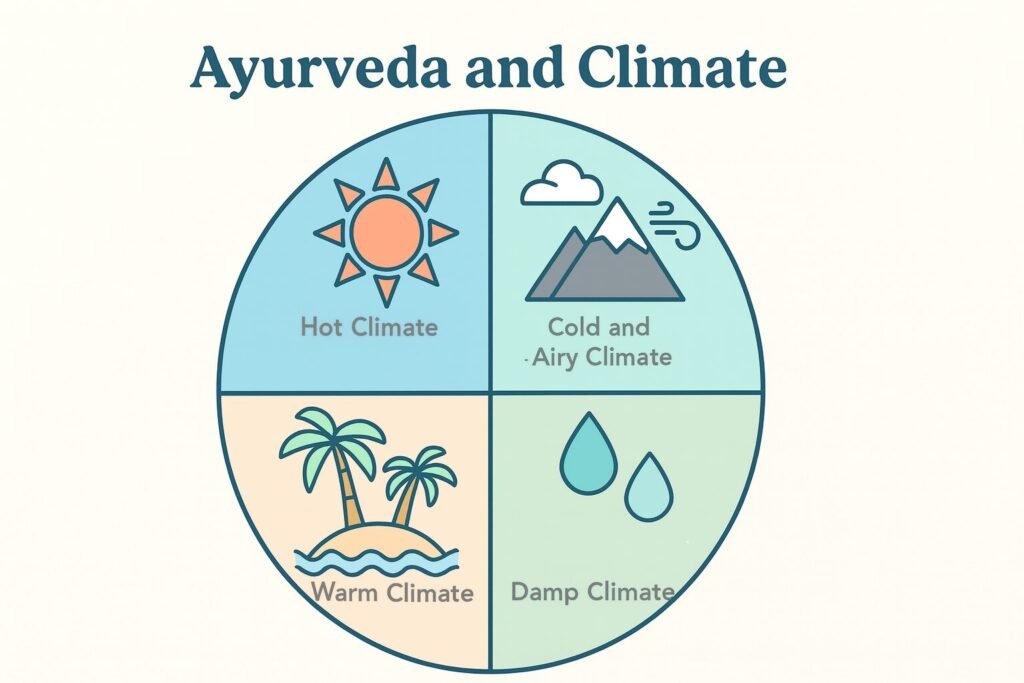
Different climates can aggravate or soothe the doshas depending on their qualities. Let’s explore each:
🌬️ Vata and Cold, Dry Climates
Vata is aggravated in climates that mirror its own qualities — cold, dry, windy, and unstable environments.
Examples: High-altitude areas, deserts, arid winters
Effects on the body: Dry skin, constipation, anxiety, insomnia, joint pain
Balancing tips:
Warm, moist, cooked foods with good fats (ghee, sesame oil)
Warm clothes, oil massage (Abhyanga), grounding routines
Reduce travel and overstimulation
🔥 Pitta and Hot, Humid Climates
Pitta increases in hot, intense, and humid environments. When aggravated, it can lead to inflammation, irritability, and skin issues.
Examples: Tropical regions, summer heat, deserts during midday
Effects on the body: Acid reflux, skin rashes, anger, irritability, excessive hunger
Balancing tips:
Cooling foods like cucumber, coconut, mint, fennel
Avoid spicy, oily, fried foods and direct sun exposure
Engage in calming activities like moonlight walks and swimming
🌧️ Kapha and Cold, Damp Climates
Kapha thrives in balance but becomes excessive in cold, wet, heavy, and cloudy conditions.
Examples: Rainy seasons, foggy regions, humid winters
Effects on the body: Lethargy, weight gain, congestion, depression
Balancing tips:
Light, dry, and warm foods like barley, lentils, and spices (ginger, black pepper)
Regular exercise and early rising
Avoid dairy, cold drinks, and heavy foods
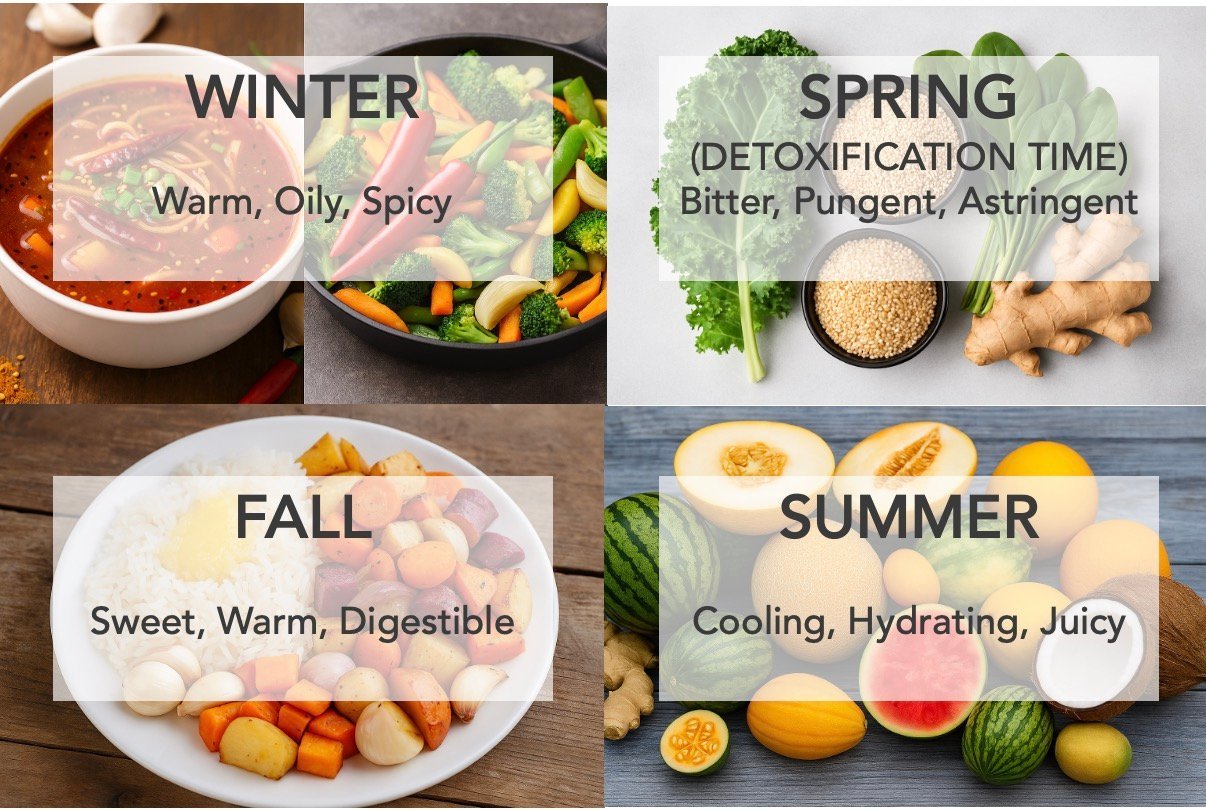
Balance is not static — it’s seasonal. What heals in summer may harm in winter. This is the genius of Ayurveda and key to Holistic Health.
Seasonal Changes and Dosha Cycles
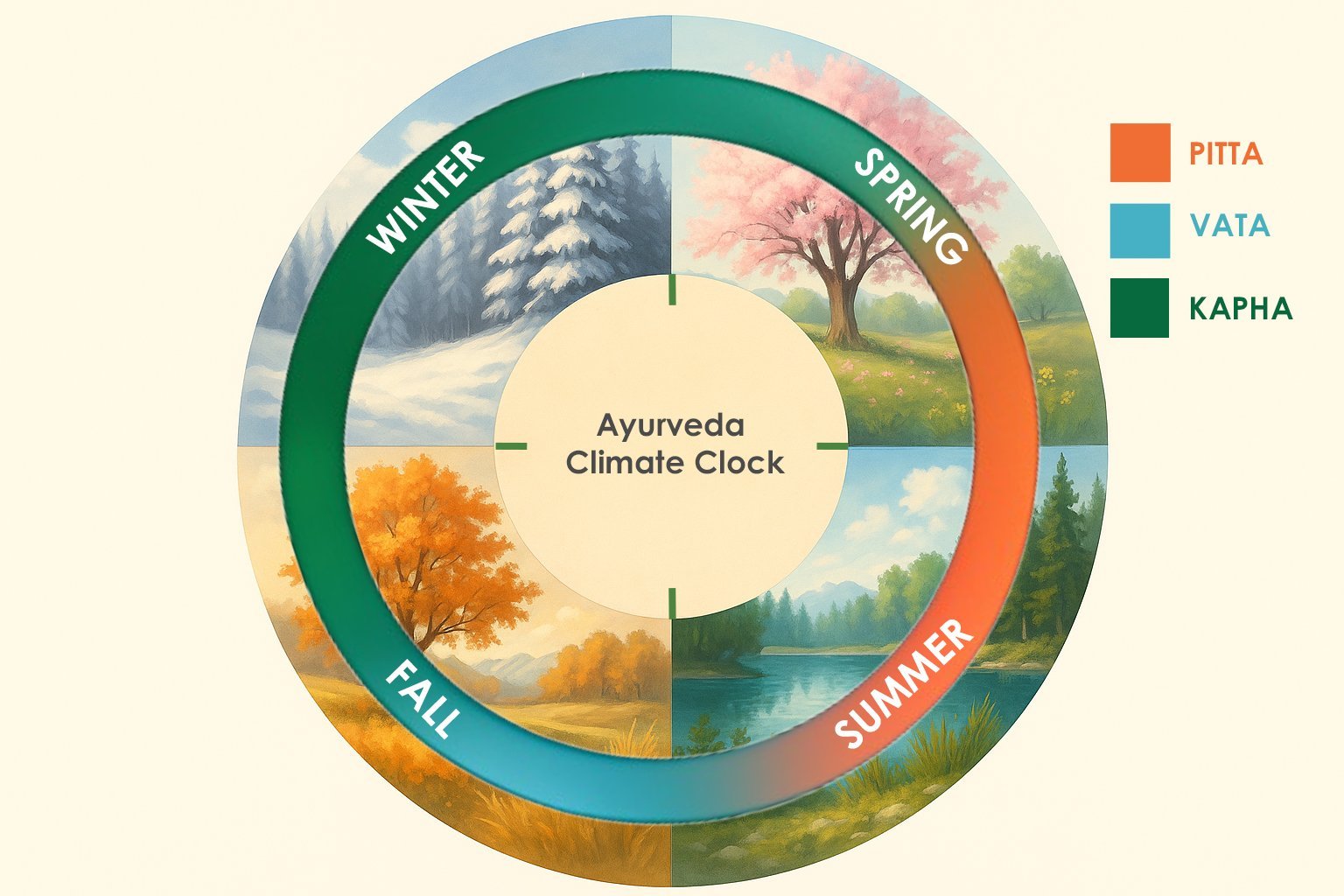
Ayurveda also teaches that the seasons cycle through the doshas, affecting the body throughout the year. This is known as Ritucharya — seasonal routines.
Late fall & winter: Vata season
Late spring & summer: Pitta season
Late winter & early spring: Kapha season
Adapting to these seasonal shifts is crucial to maintaining health.
Geographical Influence on Constitution
Your location has a powerful effect on your Vikruti. For example:
Mountain climates: Light, dry, cold — increases Vata
Tropical climates: Hot, moist — increases Pitta
Marshy/coastal climates: Damp and heavy — increases Kapha
People living in such climates over time may experience chronic imbalances if their constitution is already prone to that dosha. For instance, a Pitta-predominant person in Miami may struggle with overheating, irritability, and rashes unless they adopt a cooling lifestyle and diet.
Travel and Environmental Transitions
Ayurveda also warns about rapid transitions between climates, especially when traveling. Jet lag, digestion problems, mood swings, or illness are common when the environment changes suddenly.
Tips for mitigating travel impact:
Carry dosha-pacifying foods and herbs
Follow grounding routines
Hydrate with herbal teas like ginger or chamomile
Your constitution is fixed, but your balance is not. Adjusting to your climate is how you keep health fluid.
Modern Climate Stressors
In today’s world, climate stress is more intense due to:
Air pollution: Aggravates Vata and Pitta
Extreme heat from urban environments (heat islands): Increases Pitta
Artificial air-conditioning and heating: Disturbs the body’s natural adaptation
Climate anxiety & stress: Indirectly increases Vata through nervous system strain
Ayurveda encourages aligning as much as possible with natural light, temperature, and rhythms, even within modern infrastructure.
How to Build Climate Resilience with Ayurveda
Know your Prakriti and Vikruti: Self-awareness is the first step.
Adapt your diet: Shift foods seasonally to match the environment.
Embrace daily routines (Dinacharya): Wake up before sunrise, eat your largest meal at noon, wind down before 10pm.
Use herbal support: Triphala, Ashwagandha, Shatavari, and Tulsi can help regulate the body’s response to external stressors.
Oil therapies (Snehana): Use oils suited to your dosha — sesame (Vata), coconut (Pitta), mustard (Kapha).
Practice seasonal cleansing (Panchakarma): Especially helpful when moving to a new climate or entering a new season.
Conclusion
Climate isn’t just the weather — it is a living force that influences our inner world. Ayurveda provides timeless tools to harmonize with the environment, whether you’re living in the icy peaks of the Rockies or the humidity of Florida coast.
By tuning into the natural cycles and adapting our routines and diet accordingly, we cultivate balance, resilience, and radiant health — no matter where life takes us. This is the true holistic health.